Goal
To consider modeling decisions and tradeoffs:
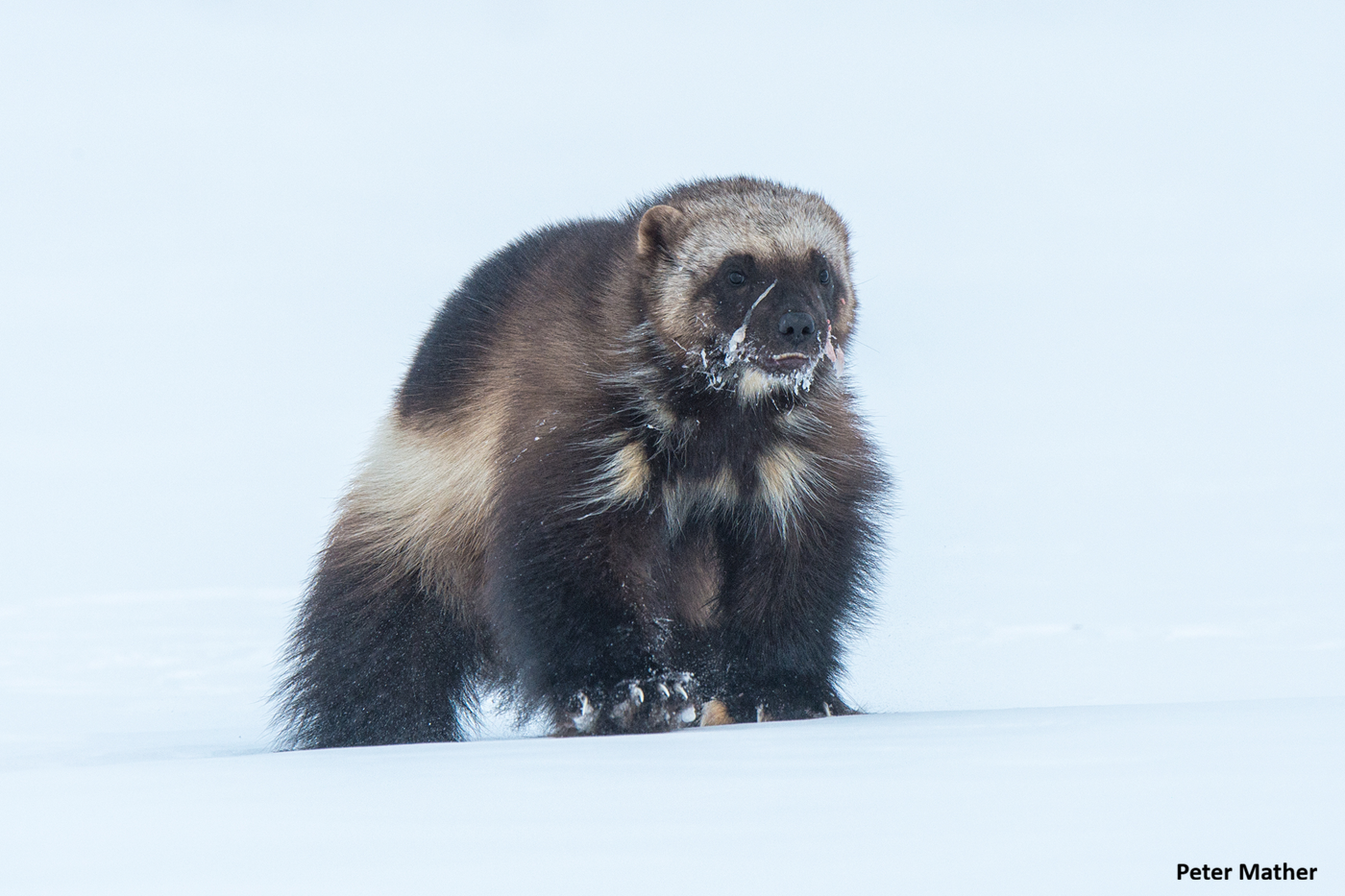
Case Study
![]()
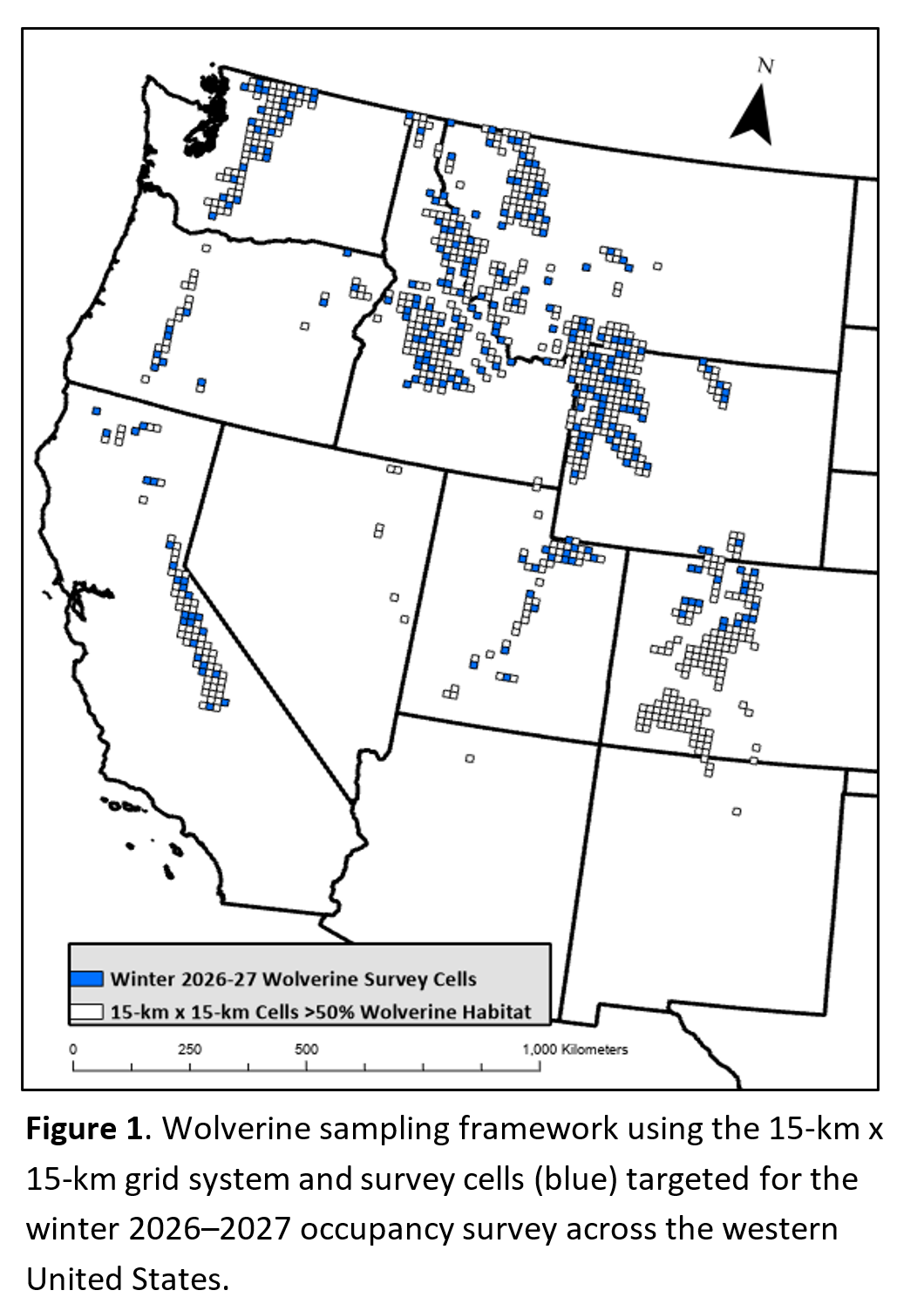
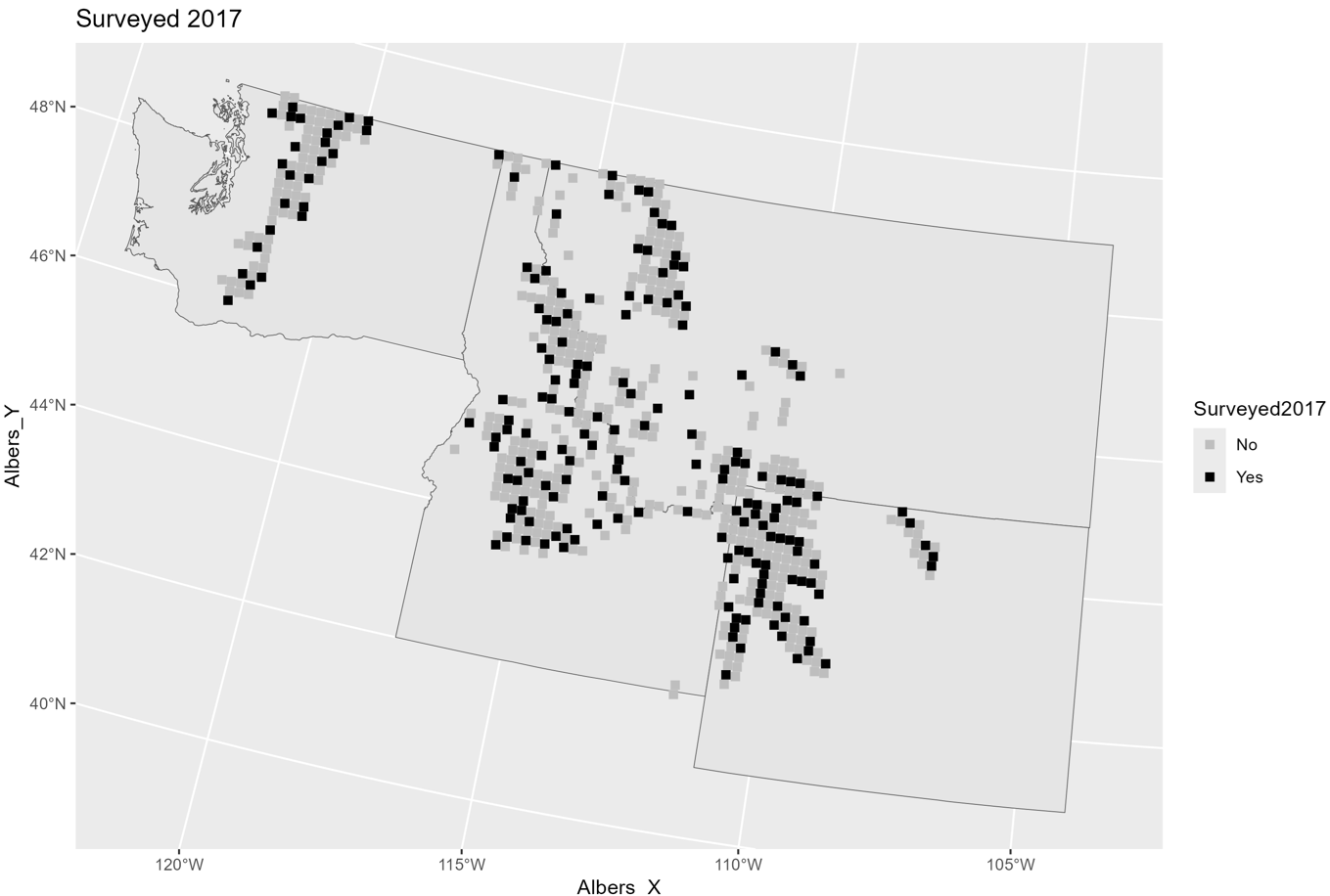
Sampling Frame
![]()
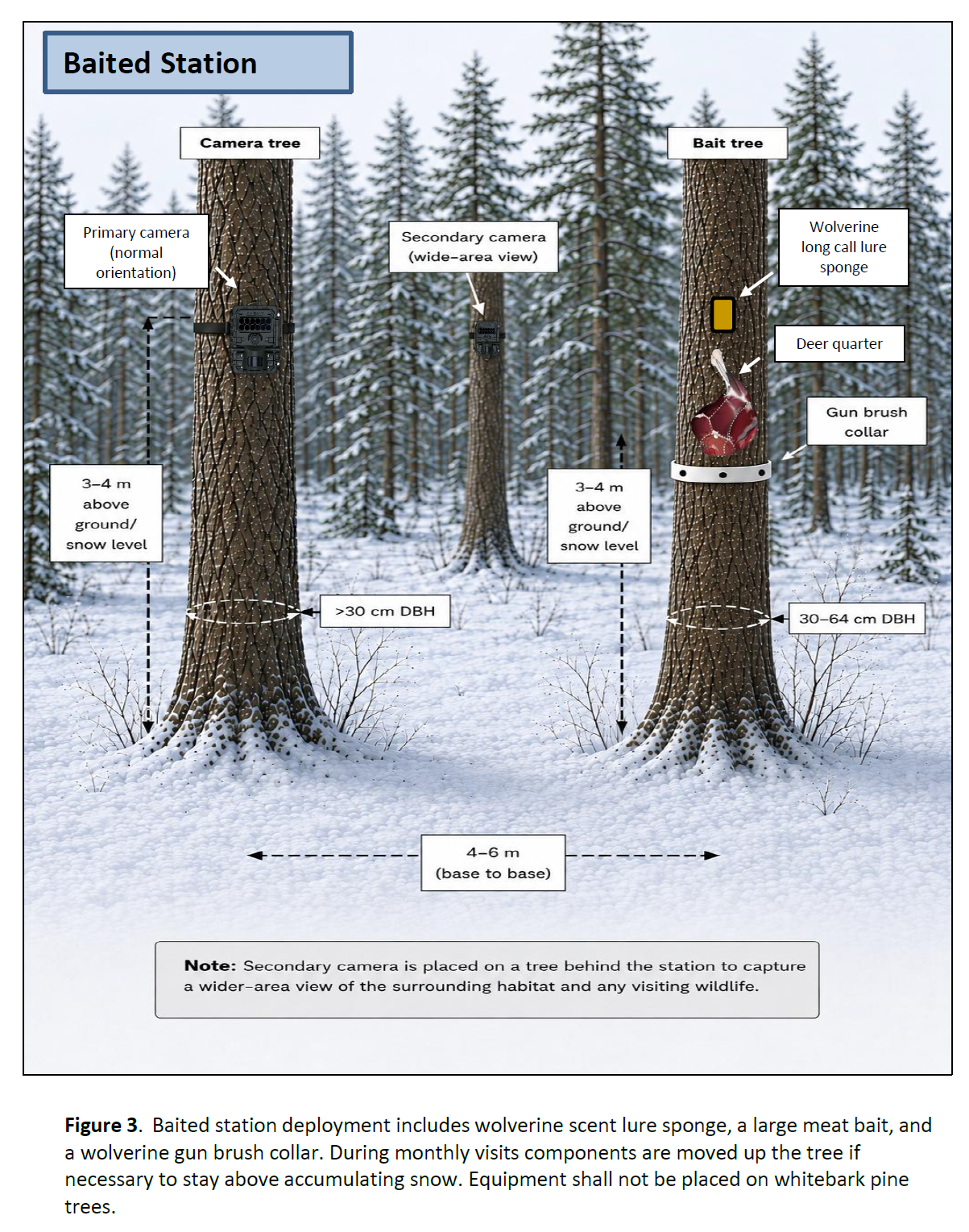
Station Setup
![]()
Project Goals
- Primary: To map winter wolverine distributions across the western U.S. to track changes in occurence over time (i.e., contraction or expansion)
- Secondary: To understand the factors that govern wolverine occurence in the western United States.
Modeling Option 1
Naive Occupancy:
\(\hat{\psi} = \frac{\sum y_i}{n}\), \(y \in \{0,1\}\)
Modeling Option 2
Fit occupancy model with covariates:
\[
\begin{align*}
\textbf{y}_{i} \sim& \text{Binomial}(z_i\times p_{i}, J)\\
z_i \sim& \text{Bernoulli}(\psi_i)\\
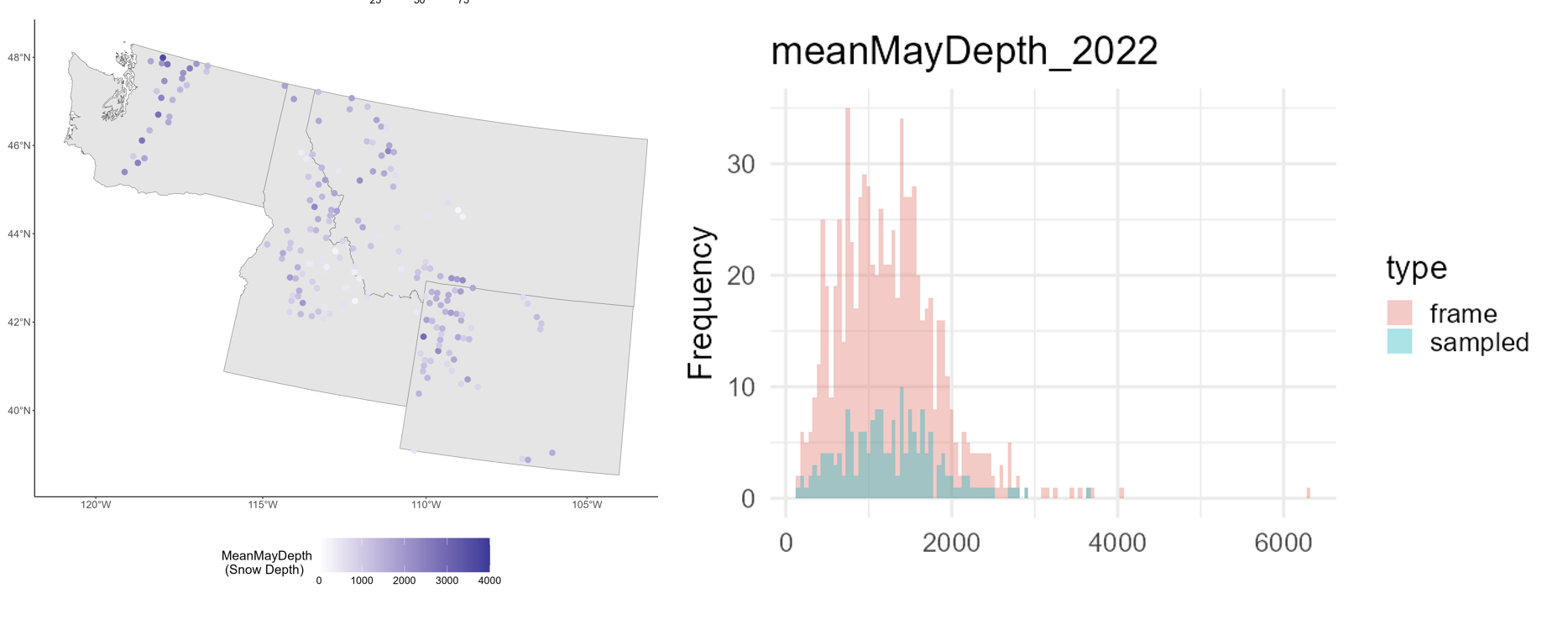
\text{logit}(\psi_{i}) =& \alpha_0 + \alpha_1 \times \text{human.mod}_{i} + \\ &\alpha_2 \times \text{elev}_{i} + \alpha_3 \times \text{snow.depth}_{i} \\
\text{logit}(p_{i}) =& \beta_0 \\
\end{align*}
\]
Modeling Option 2b
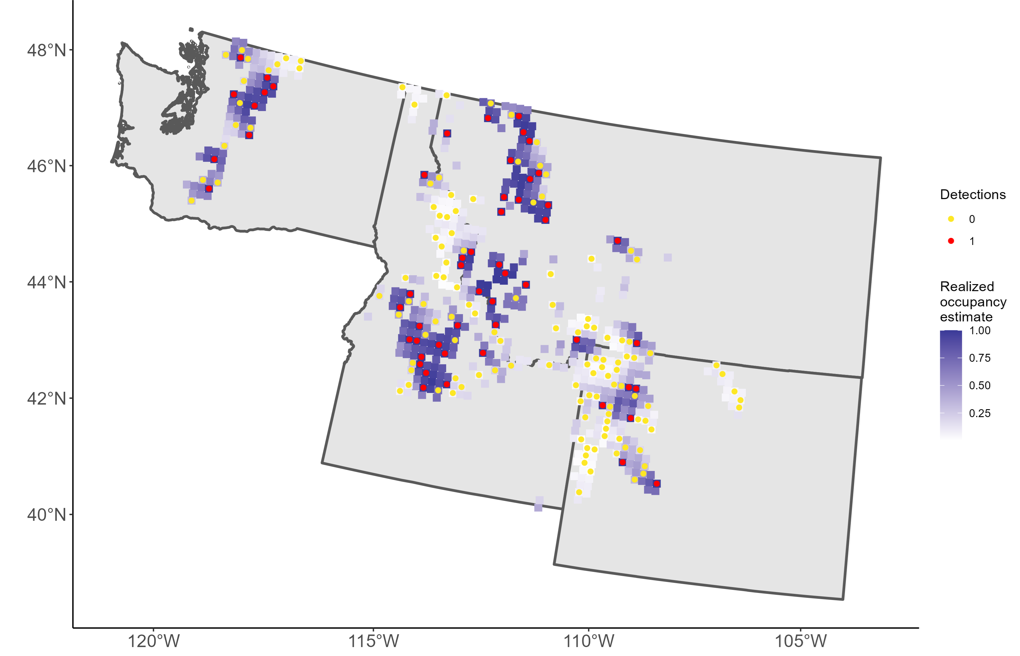
Predict occupancy only at sampled sites
Modeling Option 3
Multi-model comparison; predict occupancy at the whole sampling frame or only sampled sites
| psi ~ 1 |
|
|
|
| psi ~ human.mod |
|
|
|
| psi ~ elev |
|
|
|
| psi ~ snow.depth |
|
|
|
| psi ~ human.mod + elev + snow.depth |
|
|
|
Modeling Option 5
Prediction from a non-linear supervised machine learning algorithm at the whole sampling frame. For example, ‘random forests’, ‘gradient boosting’, ‘maximum entropy’.
- covariates required
- non-linear relationships are handled
- correlation among variables is fine
- trains model based on cross validation
To do
- Group up and discuss
- List out the benefits/costs of each option, in terms of objectives 1 and 2.
- What option would you pick? Why?
- If you make your own chimera option (mix match model type and model fitting), you need to say why it’s better and how practical it is to accomplish.
- Can ask me questions